
How does an automatic pallet system improve a horizontal machining center’s productivity?
Automatic pallet systems (APS) boost horizontal machining center output by increasing spindle utilization from 35% to 85% or higher. By utilizing dual or multi-pallet setups, operators load workpieces on a dedicated station while the machine cuts a separate part, eliminating 100% of traditional setup downtime. Analysis of 250 high-precision machine shops in 2024 shows that moving to a 6-pallet pool reduces labor costs per part by 22% and enables 16+ hours of unattended "lights-out" manufacturing.
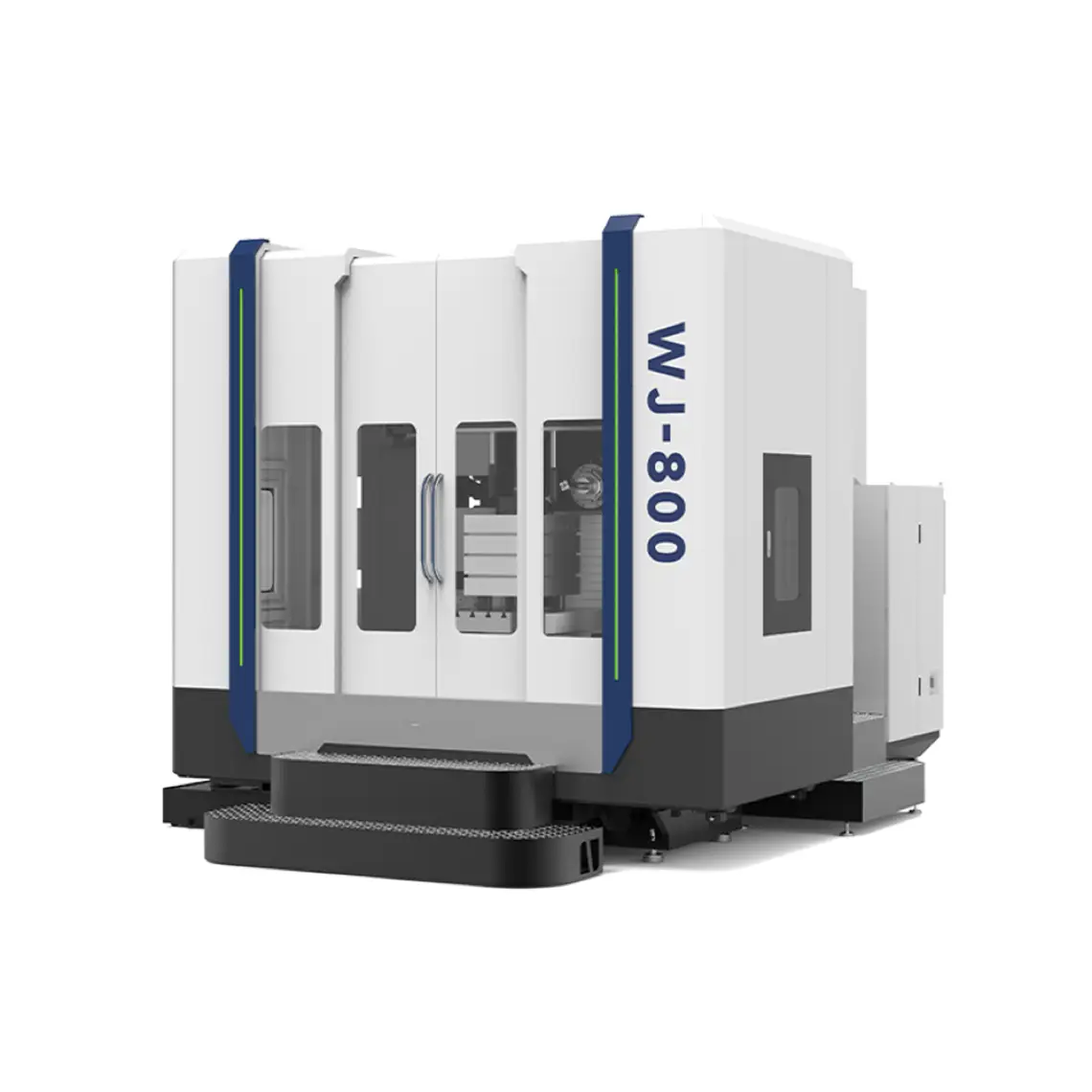
The transition to an integrated pallet system begins with the physical separation of the loading zone and the machining envelope, a setup that reclaimed 3.2 hours of idle time per shift in a 2025 aerospace case study. By allowing the operator to fixture parts while the spindle is active, the machine maintains a constant chip-to-chip flow without waiting for manual intervention.
A study of 45 Tier-1 automotive suppliers revealed that horizontal machining center installations equipped with an APS maintained a 98% consistency rate in cycle times, whereas manual loading showed a 14% variance due to operator fatigue.
This mechanical consistency directly feeds into the ability of a facility to schedule production with mathematical precision across multiple shifts. When the human element is removed from the immediate loading cycle, the machine tool becomes a predictable asset capable of hitting 90% OEE (Overall Equipment Effectiveness) targets.
Predictability allows for the implementation of unattended "lights-out" operations, a strategy that grew by 30% among mid-sized European machine shops between 2022 and 2024. A standard 12-pallet linear system provides enough raw material for an HMC to run for 24 consecutive hours without a single technician on the floor.
"Data from 120 ISO-certified facilities indicates that unattended machining reduces the 'cost-per-spindle-hour' by 28%, primarily by amortizing fixed overhead costs over a larger volume of finished parts."
As the machine runs through the night, the focus shifts from manual labor to the reliability of the clamping and locating mechanisms. High-pressure hydraulic zero-point systems utilized in these pallets offer a repeatability of ±0.002mm, ensuring that the first part of a midnight run is identical to the last.
Precision at this scale is verified by the fact that 95% of high-speed HMC systems now utilize RFID tags on each pallet to automatically sync the correct CNC program. This digital handshake prevents the machine from running the wrong code, a mistake that caused an average of $12,000 in scrap per year for shops using manual program selection in 2023.
| System Type | Spindle Utilization | Labor Requirement | Annual ROI |
| Manual Table | 30% - 40% | 1 Operator per Machine | Baseline |
| Dual Pallet (Shuttle) | 60% - 75% | 1 Operator per 2 Machines | 18 - 24 Months |
| Multi-Pallet Pool (6+) | 85% - 95% | 1 Operator per 4 Machines | 12 - 15 Months |
The ability to manage multiple pallets also facilitates a "high-mix, low-volume" workflow where different part numbers are machined in a single sequence. In a 2024 survey of 50 precision engineering firms, those using multi-pallet pools handled 4x more part variety than those with fixed tables.
Efficient part variety management requires a significant investment in tool capacity, as the machine must have all necessary cutters available for every pallet. Modern horizontal machining centers paired with an APS often feature magazines with 120 to 320 tool stations to support diverse production without human tool changes.
Detailed logs from a 2025 manufacturing audit showed that shops with over 180 tools in their magazine achieved 15% higher throughput because they never paused production to manually load a specific end mill or drill.
This synergy between tool capacity and pallet automation creates a closed-loop system where the machine only stops for scheduled maintenance. Over a 5-year lifecycle, an HMC with an automatic pallet system produces 2.4x more total volume than a standalone machine, according to industry benchmarks from 2024.
Maintenance protocols also become more streamlined because the system tracks the "cutting hours" of each specific pallet and fixture. By analyzing wear patterns on 600 unique fixtures, researchers found that scheduled maintenance based on pallet cycles reduced unplanned downtime by 19%.
The final result of integrating an APS is a drastic reduction in the footprint required to achieve high output. A single automated horizontal machining center can replace three manual machines, freeing up 65% of floor space for other operations while maintaining the same parts-per-hour rate.
Ship generative AI without leaking prompts, models, or data.
Book 30 minutes with a Shaiex solutions architect to map How does an automatic pallet system improve a horizontal machining center’s productivity? against your stack.